
How an Itecor Consultant Built a Complete E2E Testing Framework – Connected to Jira, GitHub, and BrowserStack – in Record Time
STARTING POINT
an exploratory test that turned into a full framework
It all began with a simple curiosity: testing the MCP Playwright connector with Claude. After just a few prompts, Alexandre Thibaud, Test Consultant at Itecor, found himself with a fully functional E2E automation framework integrating five major industry tools – 95% generated by artificial intelligence.
This is not a story about some kind of AI “magic,” but rather the story of a testing professional who knew how to ask the right questions, guide a language model methodically, and obtain a result that is usable in a real project context and reusable from one client to another.
ARCHITECTURE
five tools, one fully integrated end‑to‑end chain
The framework is built on tight integration between several standard tools in the QA ecosystem, each with a specific role — from test execution to reporting.
Main tools
Playwright
Automated E2E tests
GitHub Actions
CI/CD pipeline
BrowserStack
Cloud execution across multiple OS environments
Jira et Xray
Test management and campaign tracking
Confluence
Reporting and notifications
Integration flow
- Jira triggers the GitHub pipeline
- Tests run on BrowserStack
- Results are pushed back into Xray and Jira
- The Confluence dashboard updates automatically and a summary email is sent
What stands out is the coherence of the entire system. After each execution, the quality manager has a complete view: an automatically updated Confluence dashboard, a summary message with a direct link to the Jira execution, and access to BrowserStack video replays – all without any manual intervention.
THE METHOD
how AI built the framework, step by step
The process was structured and incremental. At no point did Alexandre ask the AI to “generate tests” in a vague way. Each step was guided by precise, contextualised instructions.
Based on a detailed prompt, Claude analyzed a demo e‑commerce website and proposed ten test cases covering authentication, the product catalog, and the checkout flow – with enough detail to automate them directly.
The scenarios were translated into Playwright tests, executed locally, then corrected through successive iterations. The AI analysed failures, suggested adjustments, and refined the code until all tests passed. The first operational tests were obtained in roughly thirty minutes.
Through a series of structured prompts, the AI generated the CI/CD pipeline, Xray integration scripts, Confluence reporting, and the notification system. The architecture was built progressively, in continuous dialogue with Alexandre.
Instead of starting from scratch, the AI analysed the existing framework, identified uncovered functional areas (payment, footer, wishlist, combinatorial scenarios), and generated new tests, which were then validated by the consultant.
At every stage, one instruction made a decisive difference: “If you have questions or need clarification, ask before you start.” This reflex reduced back‑and‑forth and significantly improved the quality of the deliverables.
A key principle
RESULTS
clear Indicators for QA Leaders
Framework en chiffres
*Compared to one week on an equivalent project without AI.
On an existing framework, adapting it to a new project can now be done in just a few hours.
FUNCTIONAL COVERAGE
what the framework actually tests
The coverage is far from superficial. On a reference e‑commerce site, the framework covers the entire user journey with real depth.
This level of coverage was achieved progressively by asking the AI to analyse existing tests and suggest new relevant areas. Some combinations – especially between payment methods and delivery options – would likely not have been identified as quickly without this approach.
WHAT PEOPLE DON’T ALWAYS TELL YOU
the real conditions for a successful AI project
Discussions with the audience highlighted several key points of vigilance.
Domain expertise remains essential
Without mastery of best practices (Page Object Model, data management, modularity), AI cannot produce anything sustainable. It amplifies expertise — it does not replace it.
Human review is non‑negotiable
Every test was reviewed. Business scenarios were validated step by step to ensure the relevance of assertions.
Prompt quality determines output quality
A vague prompt produces a vague result. Instructions on code structure, data handling, and technical constraints were explicitly defined from the start.
Iteration is the real engine
The final framework is the result of multiple cycles of generation, testing, correction, and reformulation.
Maintainability is addressed, not avoided
The framework is built on a Page Object Model and benefits from Playwright’s assisted‑correction capabilities — including an agent that can propose adjustments after UI changes, subject to human validation.
In this specific case, Claude (Sonnet model) proved more suitable than ChatGPT or Gemini for this type of task. The choice of tool must be made upfront and tested on cases close to the client’s context. In constrained environments, switching AI models mid‑project remains costly.
On choosing the right AI tool
REUSABILITY
a ready‑to‑use template for your projects
The framework was designed as a generic template, available on GitHub, without any business‑specific tests. It allows a new team to quickly connect to Jira, Xray, Confluence, and BrowserStack.
Adapting the template to a new application mainly consists of adjusting the target URL and generating new tests by providing the AI with the correct functional context.
The effort is estimated at just a few hours for a similar project.
The template included:
- A complete Playwright structure (Page Object Model)
- A GitHub pipeline
- Configurable GitHub Actions
- Xray integration scripts (JUnit XML)
- BrowserStack configuration
- Automatic Confluence updates
- Detailed installation documentation
More insights


Upcoming Itecor Testing Breakfast – AI for Software Quality and Value Creation
quality assurance & testing
October 12, 2026
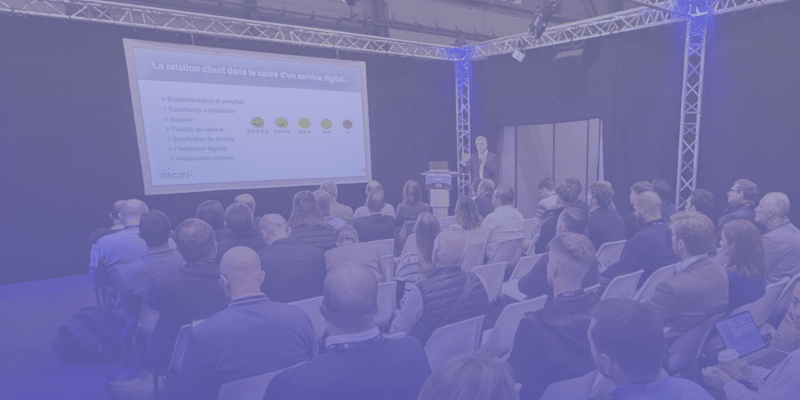
Rejoignez Itecor au Swiss IT Forum(s) 2026
digital solutionsgovernance & service managementquality assurance & testing
August 24, 2026

AI enhances the consultant, the consultant gives meaning to AI
company newsdigital solutionsgovernance & service managementquality assurance & testing
June 09, 2026